Silicon Flatirons · Published conference outcomes report
Challenges in Sustaining Space as a Resource
Published January 27, 2026
Industry, scientific, and policy perspectives on spectrum management, orbital sustainability, and the responsible development of space as a resource.
I co-authored this report with Sarah Joy Caster and Holly Chavet Ely. The work deepened my interest in developing technologies and coordinating operations that preserve access to space for future generations. My research and writing covered orbital debris, spectrum policy, dark and quiet skies, and future uses of space.
Published citation
Sarah Joy Caster, Holly Chavet Ely, and Andreas Wilwerding. Conference Outcomes Report: Challenges in Sustaining Space as a Resource. Silicon Flatirons, 2026.
- My role
- Space Systems and Policy Research Intern
- Disciplines
- Aerospace · Space Policy
The challenge
Space infrastructure provides critical capabilities for communication, navigation, science and Earth observation. As activity expands, orbital debris, spectrum coordination, regulation and access to shared orbital resources become increasingly important. The June 24–25, 2025 conference brought together scientific, commercial, legal and policy perspectives to discuss these issues.
Research and conference support
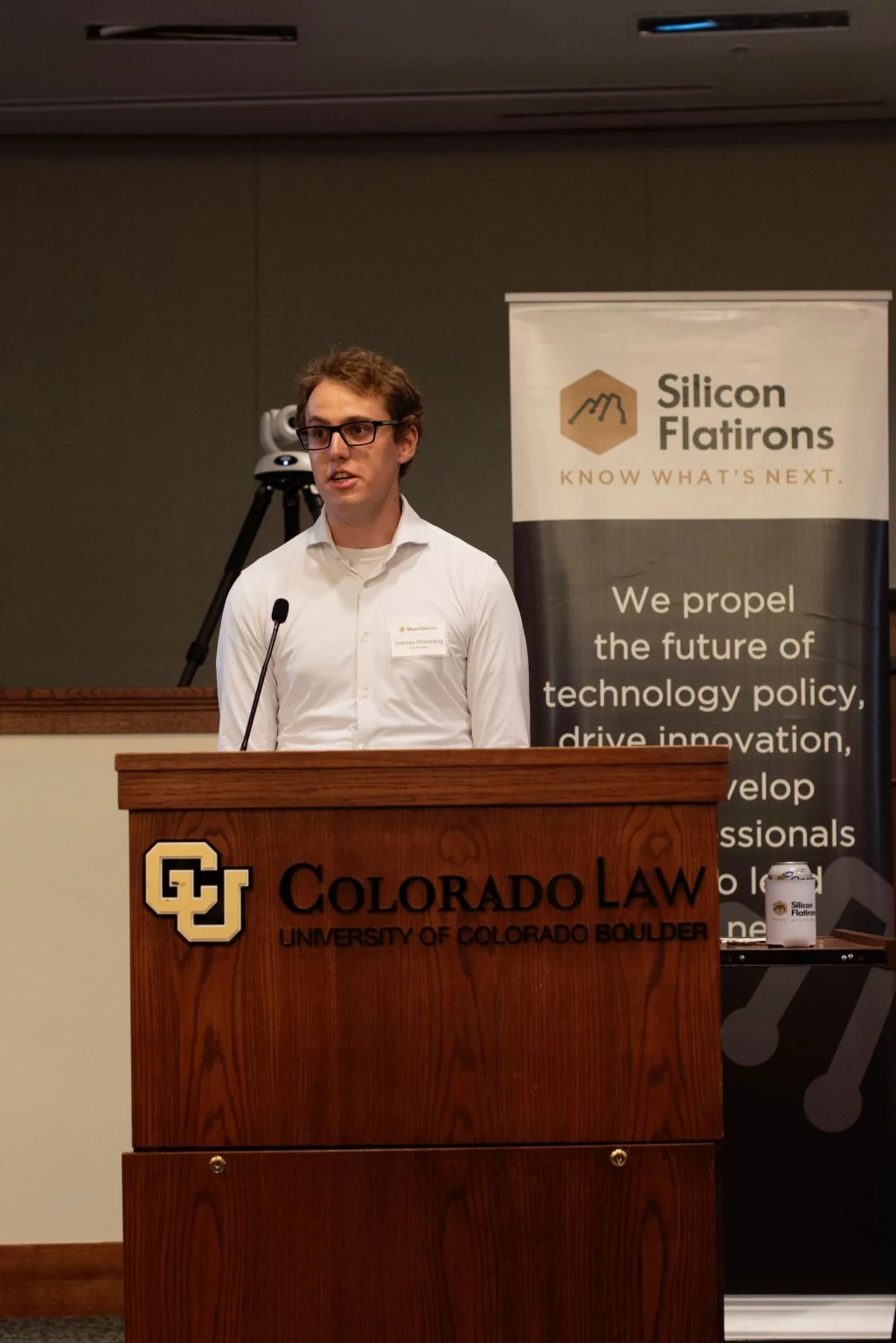
As a Space Systems and Policy Research Intern, I researched spectrum management, FCC regulatory issues and orbital debris on a short preparation timeline. I helped prepare briefings and supported the conference alongside colleagues with legal and policy backgrounds.
I had the opportunity to hear from and engage with people across the space sector. The conference keynotes included Anna Gomez, then an FCC commissioner, David Goldman, then SpaceX’s vice president of satellite policy, and Adam Cassady, then a principal deputy assistant secretary and deputy administrator at NTIA.
My contribution to the published report
I collaborated with Sarah Joy Caster and Holly Chavet Ely to organize and write the conference outcomes report under the guidance of Silicon Flatirons. The official report credits all three contributors. My assigned sections included:
- Adam Cassady’s keynote (pages 15–18)
- Topic 5: Dark and Quiet Skies (pages 34–40)
- Topic 6: Beyond Earth: Extending Spectrum Management to Deep Space and the Moon (pages 41–45)
- Munch & Muse: Scouting the Speculative Frontier (pages 46–51)
The list describes my assignments within the team’s report. Silicon Flatirons published it on January 27, 2026. The report itself is dated January 21.
Recognition
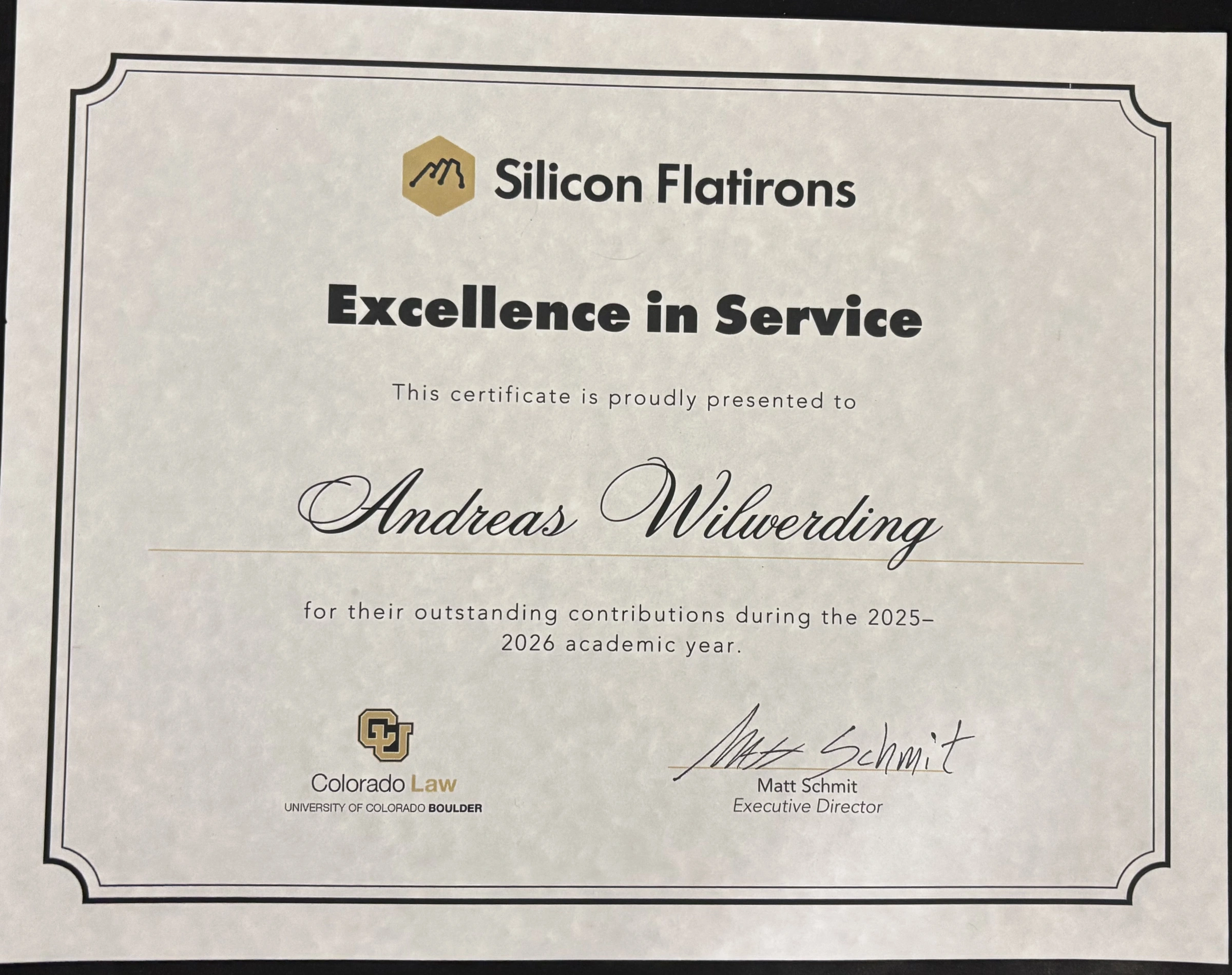
I received Silicon Flatirons’ Excellence in Service recognition for the 2025–2026 academic year following my work on the conference outcomes report. I’m grateful to Keith Gremban for his guidance throughout the project and for nominating me. See Awards & Publications.
Why this work matters to me
The conference showed me how much cooperation it takes to keep space usable. Technical, scientific, commercial, legal and regulatory perspectives helped me understand the scale of the work already underway.
My engineering interests include robotic satellite servicing, inspection, maneuvering and end-of-life support. Timely orbital data and coordination between operators matter for collision-risk management, spectrum coordination and continued access to space.